


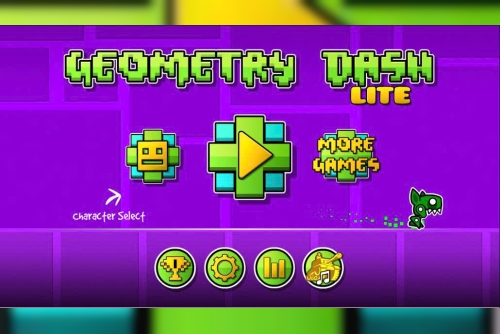
If you've ever found yourself mesmerized by a small cube bouncing through a neon-filled obstacle course, perfectly timed to electronic beats, then you already know the magnetic pull of geometry jump games. There's something oddly satisfying about the combination of music, movement, and precision timing that keeps players coming back for "just one more attempt." Whether you're new to this genre or looking to sharpen your skills, understanding the fundamentals will transform your experience from frustrating to genuinely enjoyable.
Understanding the Core Gameplay
Geometry jump games revolve around a deceptively simple concept: guide a geometric shape through increasingly complex levels while dodging obstacles. The most famous example, Geometry Dash, exemplifies this perfectly. Your character—often a cube, but sometimes a wave, ball, or ship—automatically moves forward through each level. Your only job is to make it jump at precisely the right moments to clear spikes, gaps, and other hazards standing in your way.
The magic lies in the synchronization between the level design and its accompanying soundtrack. Every platform, spike, and obstacle is carefully choreographed to match musical beats and rhythms. This isn't coincidental; it's the heart of what makes these games addictive. Your brain naturally anticipates beats, and when your jumps align with them, there's a rush of satisfaction that goes beyond mere gameplay mechanics.
Most geometry jump games use incredibly responsive controls—typically just a tap or mouse click to jump. This simplicity is intentional. With only one action available, the focus shifts entirely to timing and pattern recognition. You're not juggling complex button combinations; you're dancing with the game's rhythm.
Building Your Jumping Foundation
Starting your geometry jump journey means accepting that failure is part of the process. Don't view restarting a level fifty times as frustration—view it as learning the game's language. Each attempt teaches your fingers and brain the exact rhythm needed.
Begin with easier levels to develop muscle memory. In Geometry Dash, the early levels introduce fundamental mechanics one at a time: basic jumping, longer gaps, moving platforms, and directional changes. Rushing past these feels tempting, but they're actually valuable training grounds. Your timing skills will benefit enormously from nailing the fundamentals before tackling harder content.
Pay close attention to audio cues alongside visual ones. Many players make the mistake of focusing exclusively on what they see. The music is equally important. Listen for rhythm patterns that precede difficult sections. Often, the beat picks up or changes just before a tricky sequence, giving you a heads-up that precision will be needed.
Practical Tips for Improvement
Practice patience over pressure. Geometry jump games reward consistency, not speed. Rush through levels frantically, and you'll find yourself failing needlessly. Calm, deliberate movements win races. Each jump should feel intentional, not panicked.
Take strategic breaks. If you've been stuck on one section for extended periods, stepping away helps. Your brain processes and learns patterns even during downtime. Returning with fresh eyes often means you'll breeze through what previously seemed impossible.
Customize your settings. Most geometry games offer audio and visual adjustments. If the default soundtrack doesn't vibe with your rhythm sense, explore alternatives. Some players perform better with different visual themes or particle effects, so experiment until you find what clicks.
Study successful attempts. When you finally complete a challenging section, pause and mentally review what went right. Was your timing earlier? Did you anticipate a jump differently? This conscious reflection accelerates learning far more than simply replaying without reflection.
Embrace different game modes. Beyond the main campaign, geometry jump games typically offer practice modes, custom levels, and varied challenges. These aren't distractions—they're opportunities to develop different skills. A practice mode focusing on a single difficult jump teaches precision. Custom levels from other players introduce fresh patterns and creative designs.
Why These Games Matter
There's an underestimated value in games that distill challenges into their purest form. Geometry jump games strip away elaborate narratives and complex mechanics, leaving only the core challenge: can you synchronize your actions with a pattern? This simplicity is profound. It teaches hand-eye coordination, rhythm recognition, timing sensitivity, and resilience through repeated practice.
Beyond skill development, these games offer a form of moving meditation. The hypnotic combination of music and motion creates a flow state where time seems to disappear. Many players describe the experience as therapeutic, offering a mental escape while simultaneously demanding complete focus.
Conclusion
Geometry jump games like Geometry Dash succeed because they understand something fundamental about human nature: we crave challenges scaled to our ability, paired with immediate feedback and satisfying rhythms. Starting your journey might feel daunting, but every master player began exactly where you are now.
The key isn't possessing some hidden talent—it's commitment to learning through repetition and embracing the journey rather than fixating on completion. Each failed attempt isn't wasted time; it's data your brain uses to improve. With patience, practice, and a willingness to enjoy the process rather than just the destination, you'll discover why these deceptively simple games have captivated millions worldwide.
Jump in, find your rhythm, and enjoy the ride.