

Marriage in Hinduism is more than a social or legal contract—it is a sacred institution believed to be divinely ordained. Deeply rooted in Vedic tradition, Hindu marriage signifies a union not just of two individuals, but also of two souls bound together through duties, responsibilities, and mutual respect. Over centuries, Hindu scriptures have elaborated various forms of marital alliances to accommodate diverse social and spiritual contexts. Among these, the 8 types of Hindu marriage hold particular importance, offering a comprehensive view of ancient matrimonial practices.
Concept of Hindu Marriage
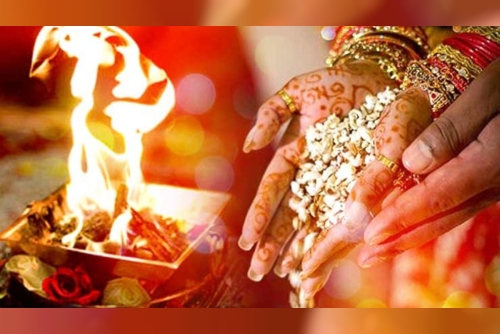
A Hindu marriage is considered a sacrament (samskara)—a lifelong commitment that extends beyond physical and emotional compatibility. It involves sacred rituals, mantras, and fire offerings (agni) that sanctify the relationship. The institution of marriage in Hinduism is primarily aimed at fulfilling three primary goals: dharma (duty), praja (procreation), and rati (pleasure or companionship).
The ancient texts, particularly the Manusmriti and other Dharmashastra literature, categorize marriages based on the manner of union, the rituals involved, and the social approval surrounding the alliance. These classifications form the 8 types of marriage in Hindu tradition.
The 8 Forms of Hindu Marriage
The types of hindu marriage are broadly divided into two categories: approved (prashasta) and disapproved (aprashasta) forms. The approved types are those that align with Vedic principles, while the disapproved types are considered socially or morally questionable, although still recognized in certain historical contexts.
Brahma MarriageThis is the most respected and ideal form of Hindu marriage. In this form, the bride’s father gives her to a groom of good character and Vedic learning, usually without any dowry or expectations. The focus is on virtue, education, and family values. Brahma marriage is highly recommended for Brahmins and has been widely practiced as the standard Hindu marriage. Daiva Marriage
In a Daiva marriage, the bride is offered to a priest as a gift, typically in the course of a sacrificial ritual. This form places importance on religious merit, and though considered lesser than Brahma marriage, it is still a praiseworthy union. Arsha Marriage
This type involves the exchange of symbolic gifts, such as cows or bulls, from the groom to the bride’s family. It reflects a simpler lifestyle, often observed among sages or in rural societies. The emphasis here is on mutual consent and symbolic offering rather than wealth or status. Prajapatya Marriage
This form is centered around a sense of duty and responsibility. The bride is given away with the intent that both spouses will jointly perform religious and household duties. Unlike the Brahma marriage, it does not necessarily require scholarly or priestly qualifications. Gandharva Marriage
Gandharva marriage is the union based solely on mutual attraction and love, without any formal rituals or parental consent. It is essentially a love marriage, often romanticized in literature and folklore. Though considered less traditional, Gandharva marriage acknowledges personal choice and emotional compatibility. Asura Marriage
In this disapproved type, the groom gives wealth or property to the bride’s family to obtain her hand in marriage. It is viewed as a form of bride-buying and considered unethical due to its materialistic basis, though historically it occurred in royal and warrior classes. Rakshasa Marriage
This form involves the forcible abduction of a bride against her will, typically during warfare or conflict. Though recognized as a form of marriage, it is condemned for its coercive nature and disregard for the bride’s consent. Paisacha Marriage
The lowest and most condemned form, Paisacha marriage refers to a union where the man seduces or violates a woman when she is asleep, intoxicated, or mentally unstable. It is considered sinful and criminal, though ancient texts mention it for the sake of categorization.
Relevance of the 8 Types of Marriage Today
While most modern Hindu marriages closely resemble the Brahma marriage, especially among educated and urban populations, elements of other forms—like Gandharva marriage—have re-emerged in the form of love marriages. The classification of these 8 Types of Marriage serves as a historical and ethical framework, shedding light on societal norms, gender roles, and religious values in ancient India.
Contemporary Hindu marriage largely draws from the spiritual and ritualistic ideals of traditional forms, while gradually adapting to modern expectations of love, equality, and individual choice. Understanding these types of Hindu marriage not only enhances cultural awareness but also offers insight into the evolution of marital customs within one of the world’s oldest religions.



 Tax Planning Secrets Millionaires Don’t Want You To Know