


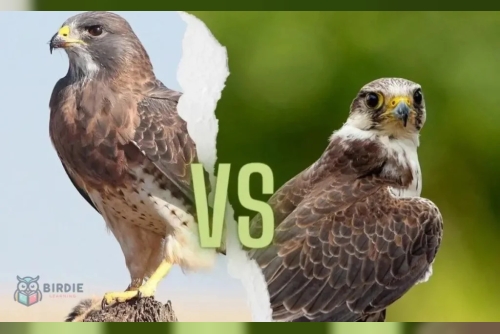
Introduction: The Fascination with Falcons and Hawks
If you’ve ever glanced skyward and caught a flash of a bird soaring effortlessly, chances are it was a bird of prey. But was it a falcon or a hawk? For many nature enthusiasts, distinguishing between the two can feel like trying to tell twins apart from a distance.
I still remember my first encounter with a peregrine falcon streaking past a city skyline. Its speed was astonishing. A few minutes later, a red tail hawk bird perched on a nearby tree, calmly scanning for prey. The contrast couldn’t have been more striking. Over time, observing these birds raptors taught me that understanding their subtle differences makes birdwatching infinitely more rewarding.
Body Structure: Streamlined vs. Broad
One of the first clues lies in body shape.
· Falcons: Species like the American kestrel or peregrine falcon are streamlined and sleek. Their wings are long and pointed, built for incredible speed. In fact, peregrine falcon speed can reach over 200 mph in a dive!
· Hawks: Birds like the Cooper's hawk, broad winged hawk, or ferruginous hawk are broader and bulkier. They have wider wings adapted for soaring and maneuvering through forests or open landscapes. The red shouldered hawk, for example, glides with graceful, rounded wings.
Observing wing shape in flight can often give you your first hint about whether you’re looking at a falcon or a hawk.
Hunting Style: Precision vs. Patience
Falcons vs hawks differ not just in appearance but also in their hunting methods.
· Falcons: Built for speed, falcons hunt by chasing prey mid-air. Watching a peregrine falcon dive at astonishing velocity is a lesson in precision and aerodynamics.
· Hawks: Most hawks, such as the red tail hawk bird or Cooper's hawk, rely on patience and ambush. They soar high, scanning for movement, then swoop down with controlled accuracy.
Understanding these behaviors helps when you’re trying to identify a raptor from afar. A streaking dive often signals a falcon, whereas a steady glide or perch likely indicates a hawk.
Coloration and Markings: Subtle Hints
Colors and patterns provide more clues:
· Falcons: Generally more uniform and sleek, often with subtle bars or streaks. The American kestrel shows vibrant, contrasting colors that are easier to spot in smaller species.
· Hawks: Typically display broader bands on their tails and wings. The broad winged hawk has distinctive tail bars, while the ferruginous hawk shows rusty hues across its shoulders and chest.
Noticing these differences requires patience, but it’s part of the thrill of birdwatching.
Habitat Preferences: Where to Look
Knowing where to search makes identification simpler:
· Falcons: Often prefer open spaces cliffs, tall buildings, or urban environments where they can utilize speed to hunt peregrine birds.
· Hawks: Favor wooded areas or edges of forests. Red shouldered hawk and Cooper's hawk often nest in trees, providing cover for ambush hunting.
A quick glance at the environment can narrow down your options before you even focus on the bird itself.
Conclusion: Becoming a Skilled Observer
Spotting the differences between falcons and hawks is a rewarding challenge that improves with practice. Focus on body structure, hunting style, coloration, and habitat to refine your identification skills.
Start by keeping a simple notebook or phone log of sightings. Sketching or photographing birds helps you remember markings and behaviors. Over time, you’ll find yourself distinguishing a red tail hawk bird from a peregrine falcon almost instinctively a skill that brings the majesty of birds raptors into sharper focus every time you look to the sky.