


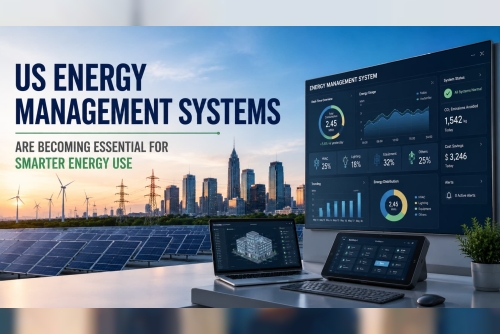
The US energy management systems sector is expanding as commercial buildings, industries, utilities, institutions, and public facilities look for better control over electricity consumption, operational costs, emissions, and grid reliability. Energy management systems use software, sensors, meters, analytics, automation, and control devices to monitor energy use and improve efficiency across buildings and industrial operations. As electricity demand rises and companies face stronger sustainability expectations, EMS adoption is becoming a practical part of energy planning.
According to MarkNtel Advisors, the US energy management systems sector was valued at around USD 14.18 billion in 2025 and is projected to reach USD 26.98 billion by 2032. The US energy efficiency outlook indicates a CAGR of around 9.62% during 2026–2032, supported by industrial energy management systems, building automation, sustainability reporting, smart metering, and growing demand for lower operational energy costs.
Industrial Energy Management Systems Lead Adoption
Industrial energy management systems account for around 37% share of the US energy management systems sector in 2025. Manufacturing plants, refineries, food processing units, chemical facilities, data centers, warehouses, and large production sites consume high amounts of electricity, heat, and fuel. EMS platforms help these facilities identify inefficiencies, monitor equipment loads, reduce peak demand, and improve process-level energy performance.
The U.S. Department of Energy supports industrial efficiency and decarbonization through programs focused on reducing energy intensity and improving manufacturing competitiveness. This aligns closely with EMS adoption, as industrial operators need measurable data and automated control systems to reduce waste while maintaining productivity.
Building Energy Management Is Growing Quickly
Building energy management systems are expected to grow strongly as offices, hospitals, universities, airports, hotels, retail spaces, and public buildings modernize their energy infrastructure. BEMS platforms help manage HVAC systems, lighting, ventilation, occupancy patterns, indoor comfort, and equipment schedules. Since buildings represent a major share of electricity use, automation and real-time monitoring can make a significant difference in operating costs.
The U.S. Environmental Protection Agency runs ENERGY STAR for buildings, which supports energy benchmarking, performance tracking, and efficiency improvement. This type of framework encourages facility owners to measure energy performance more accurately, creating a stronger case for energy management systems.
Smart Meters and Data Analytics Support Better Decisions
Energy management systems depend heavily on accurate data. Smart meters, submeters, IoT sensors, and cloud-based platforms allow organizations to monitor consumption by building, floor, department, equipment type, or production line. This helps decision-makers identify energy spikes, abnormal loads, poor equipment performance, and opportunities for automation.
The U.S. Energy Information Administration provides energy data and analysis that help organizations understand electricity use, fuel prices, and consumption trends. At the facility level, EMS platforms provide similar decision-support value by converting operational energy data into actions such as demand response, load shifting, equipment optimization, and maintenance planning.
Demand Response Is Strengthening EMS Value
Demand response programs are becoming more relevant as utilities manage peak electricity demand and grid stress. Energy management systems allow buildings and industrial users to adjust loads during high-demand periods without fully disrupting operations. This can include reducing HVAC intensity, shifting battery use, adjusting production schedules, or temporarily lowering non-critical loads.
The Federal Energy Regulatory Commission recognizes demand response as an important resource in electricity markets. EMS adoption supports this by giving facilities the control and visibility needed to participate in demand response programs.
Sustainability Reporting Is Increasing Pressure
Companies are also adopting energy management systems to support sustainability reporting and emissions reduction goals. EMS platforms can track energy consumption, estimate emissions, generate reports, and support audits. This is important for companies responding to investor expectations, corporate climate targets, and customer requirements.
The National Renewable Energy Laboratory works on building efficiency, grid-interactive technologies, and energy performance research. These areas are increasingly connected with EMS platforms, especially as buildings become more digital, automated, and integrated with distributed energy resources.
Looking Ahead
The US energy management systems sector is expected to grow steadily as industrial facilities, commercial buildings, utilities, and public institutions prioritize efficiency, cost control, resilience, and emissions reduction. With the sector projected to reach USD 26.98 billion by 2032 at a CAGR of around 9.62%, demand is likely to remain strongest in industrial energy management, building automation, smart metering, analytics platforms, and demand response integration. The long-term direction will depend on electricity prices, grid modernization, cybersecurity, interoperability, sustainability regulations, and the ability of EMS providers to deliver measurable energy savings across complex facilities.



 Sport Technique et Stylé – Les Équipements Incontournables pour 2026