


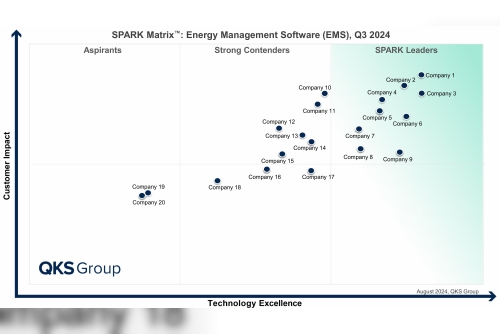
As organizations accelerate digital transformation and pursue sustainability goals, Energy Management Software (EMS) has become a mission-critical technology for industries worldwide. Modern EMS platforms help enterprises monitor, optimize, and reduce energy consumption across facilities, equipment, and distributed assets. With rising energy costs, global emission mandates, and the need for real-time operational efficiency, EMS adoption is expanding across manufacturing, smart buildings, utilities, transportation, and data centers.
QKS Group’s SPARK Matrix™ analysis positions EMS as a strategic investment for enterprises seeking data-driven decisions, operational resilience, and long-term cost savings. The global ecosystem is evolving quickly, driven by digital twins, IoT-based energy monitoring, AI forecasting, renewable integration, and automated optimization workflows.
Click Here For More Information: https://qksgroup.com/market-research/spark-matrix-energy-management-software-ems-2024-8107
Understanding the Role of Energy Management Software (EMS)
Energy Management Software (EMS) is a centralized digital platform that provides real-time visibility into how energy is consumed across an organization. It combines advanced analytics, automation, IoT device integration, predictive maintenance, and sustainability reporting to help companies achieve measurable efficiency.
Key functionalities include:
Real-time energy monitoring Load forecasting and demand response KPI dashboards and facility benchmarking Carbon footprint reporting Renewable energy tracking Cost optimization and predictive billing Automated anomaly detectionEMS is no longer a passive reporting tool—modern platforms actively recommend corrective actions, automate adjustments, and integrate with broader operational technologies.
Market Drivers Accelerating EMS Adoption
1. Rising Energy Costs
Global industries are facing unprecedented energy price volatility. With EMS, organizations can shift consumption to off-peak hours, optimize loads, and secure significant cost savings.
2. Sustainability and Regulatory Pressure
Organizations must meet environmental, social, and governance mandates. EMS helps track:
Scope 1, 2, and partial Scope 3 emissions Carbon reduction progress Compliance frameworks (ISO 50001, GHG Protocol)3. Industrial Digitalization (Industry 4.0)
Factories and industrial sites are integrating EMS with:
SCADA Building management systems IoT sensors Asset performance systemsThis convergence enhances energy efficiency across the full value chain.
4. Renewable Energy Growth
EMS platforms now manage:
Solar and wind systems Energy storage systems MicrogridsThis ensures balanced energy flow and optimized sustainability outcomes.
Challenges in Selecting the Right EMS Vendor
While EMS demand increases, choosing the right platform remains challenging.
Complex Infrastructure Requirements
Different industries have unique energy profiles. Standard EMS solutions may not support:
Heavy-load industrial environments Multiple facility integrations Real-time OT (operational technology) needsFragmented Vendor Landscape
The EMS market includes:
Point-solution providers BMS system vendors Industrial software companies IT cloud platforms Utility-focused energy analytics firmsThis fragmentation complicates vendor evaluations.
Lack of Real-World Performance Data
Buyers want to know:
How EMS performs in similar industries How accurate the forecasting engine is ROI achieved by real usersTraditional advisory reports do not always capture these insights.
Download Sample Report Here: https://qksgroup.com/download-sample-form/%20?id=8107
How SPARK Plus™ Bridges the Evaluation Gap
QKS Group’s SPARK Plus™ delivers a combined view of analyst insight and real user validation, offering a 360° approach to EMS vendor evaluation.
1. Industry- and Region-Specific Comparisons
Buyers can filter vendors based on:
Region Energy intensity Industry type Organization sizeThis ensures EMS solutions are compared in the correct operational context.
2. Verified User Reviews
Real-world feedback reveals:
Deployment complexity Actual cost savings Accuracy of analytics System reliability3. Transparent Analyst Insights
SPARK Plus™ provides:
Feature comparisons Architecture evaluations Maturity assessments Scalability ratingsThis combination dramatically improves EMS vendor selection accuracy.
Strategic Impact of EMS on Modern Enterprises
Operational Efficiency
AI-driven EMS platforms continuously refine system performance, reducing waste and improving uptime.
Financial Optimization
Organizations adopting EMS see:
Lower utility bills Avoided peak penalties Reduced maintenance costsSustainability Transformation
EMS enables organizations to:
Move toward net-zero Reduce emissions Boost ESG credibilityBecome A Client: https://qksgroup.com/become-client
Conclusion
Energy Management Software (EMS) has moved from a best-practice technology to a global necessity. As energy prices rise and sustainability becomes mandatory, EMS platforms give enterprises the intelligence and agility to manage resources responsibly. QKS Group’s SPARK Plus™ brings unmatched clarity to this growing market by merging analyst-backed evaluation with customer-driven insight. Through evidence-based vendor selection, businesses can confidently invest in EMS solutions that drive long-term operational, financial, and environmental impact.






 Hands On Painters