

SPARK Matrix 2025: The Rise of Cyber Security Risk Rating Platforms
Cyber threats are escalating at an alarming pace. From ransomware and phishing to supply chain attacks and cloud vulnerabilities, enterprises face risks that evolve faster than traditional security tools can handle. Decision-makers require not just protection but visibility—a quantifiable way to assess and track cyber risk. This urgent need has driven the rapid adoption of the Cyber Security Risk Rating Platform, a technology now central to enterprise cybersecurity strategies.
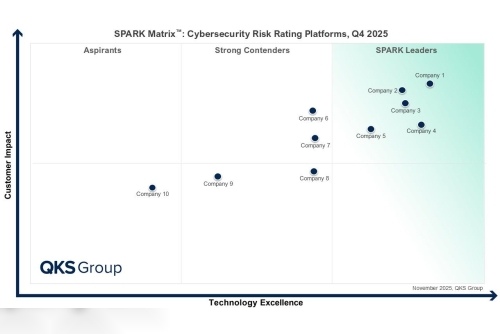
The SPARK Matrix™ 2025 highlights how vendors in this space are reshaping cyber risk management by offering real-time scoring, automated assessments, and intelligence-driven insights, enabling organizations to stay ahead of threats in a dangerous digital landscape.
Click Here For More Information: https://qksgroup.com/market-research/spark-matrix-cyber-security-risk-rating-platform-q4-2025-10058
What Makes Cyber Security Risk Rating Platforms Essential?
In a world where cyber incidents can cripple operations, damage reputations, and cost millions, organizations need a proactive approach. A Cyber Security Risk Rating Platform provides a standardized, data-driven method to evaluate cybersecurity posture internally and across third parties.
These platforms continuously collect and analyze signals—from network behavior to exposed vulnerabilities—to generate a numerical risk score. This score empowers leaders to:
Identify high-risk assets Mitigate vulnerabilities proactively Evaluate vendor security Prioritize remediation Strengthen governance and complianceRisk ratings transform cybersecurity from reactive defense into measurable, strategic risk management.
Core Capabilities of Leading Risk Rating Platforms
1. Continuous External Attack Surface Monitoring
Platforms constantly scan publicly available data, exposed assets, misconfigured systems, and vulnerabilities across the digital footprint. This ensures immediate identification of exposure points before attackers exploit them.
2. Real-Time Risk Scoring Models
Advanced algorithms analyze hundreds of data points—DNS behavior, patching cadence, email security, endpoint posture—to calculate a security score. This score becomes a actionable metric for all stakeholders.
3. Vendor Risk Assessment & Supply Chain Protection
Since most breaches originate from third-party weaknesses, platforms offer risk insight into suppliers, partners, and service providers. Vendor risk scoring is now a core compliance requirement in many industries.
4. Threat Intelligence Integration
Leading platforms integrate threat feeds, darknet intelligence, malware signatures, and global attack trends, offering holistic and context-rich security insights.
5. Automated Alerts & Prioritized Remediation
Instead of overwhelming teams with notifications, modern platforms provide prioritized insights based on severity, likelihood, and business impact—enabling smart and efficient response.
Download Sample Report Here: https://qksgroup.com/download-sample-form/%20?id=10058
Why Cyber Security Risk Ratings Are Critical in 2025
The Explosion of Third-Party Risks
With cloud services, SaaS applications, and outsourcing on the rise, enterprises rely heavily on external vendors. Risk rating platforms help evaluate and monitor security risks that arise beyond internal perimeters.
Rising Regulatory Demands
Frameworks such as GDPR, NIST, ISO 27001, and industry-specific compliance mandates now require continuous cyber risk monitoring. Risk rating platforms simplify compliance reporting.
Digital Transformation Increasing Attack Surfaces
Every cloud migration, API integration, or new digital service introduces potential vulnerabilities. Continuous monitoring ensures evolving architectures stay protected.
Need for Business-Level Visibility
Risk scores translate complex cybersecurity issues into simple metrics executives and board members can understand—enabling informed strategic decisions.
Top Trends Transforming Risk Rating Platforms in 2025
AI-Driven Predictive Risk Analytics
AI models now predict risk escalation, identify suspicious patterns, and help prioritize future vulnerabilities—making risk management truly proactive.
Unified Governance, Risk & Compliance (GRC) Integration
Platforms integrate tightly with enterprise GRC solutions, enabling automated reporting and smoother audit processes.
Risk Scoring for OT, IoT & Cloud-Native Environments
As enterprises adopt IoT devices, edge computing, and cloud-native architectures, platforms offer expanded threat detection across diverse ecosystems.
Dark Web & Breach Intelligence Enhancements
Modern platforms monitor underground forums and leaked credentials to identify compromised data before it is weaponized.
Customizable Risk Models
Enterprises can tailor risk scoring parameters based on industry, business objectives, and regulatory requirements.
SPARK Matrix 2025 Insights
The SPARK Matrix™ assesses global vendors based on technology excellence and market impact. In 2025, leaders in the Cyber Security Risk Rating Platform market demonstrate:
Robust external attack surface management Highly accurate and transparent scoring methodologies Automated remediation workflows Strong threat intelligence networks Multi-cloud and hybrid infrastructure support User-friendly dashboards for technical and business teamsThe Matrix highlights vendors enabling enterprises to move from reactive defense to intelligence-driven cybersecurity.
Become A Client: https://qksgroup.com/become-client
Conclusion: A Smarter Path to Risk Management
As cyber threats escalate in frequency and sophistication, organizations cannot rely solely on traditional tools. A Cyber Security Risk Rating Platform provides the continuous visibility, quantifiable scoring, and intelligent analysis needed to understand and mitigate risks effectively.
The insights from SPARK Matrix™ 2025 make one thing clear: enterprises that embrace advanced risk rating technologies gain a powerful advantage—greater security, stronger compliance, proactive resilience, and the confidence to lead in a hostile digital world.