


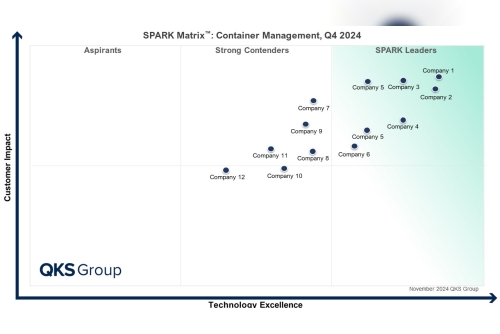
In today’s rapidly evolving digital landscape, agility and scalability define success. Businesses are under constant pressure to innovate faster, deploy applications seamlessly, and optimize resources efficiently. This is where container management solutions have emerged as a game-changer — empowering organizations to streamline operations, accelerate time-to-market, and build scalable, cloud-native applications with ease.
Containers have revolutionized how applications are built, deployed, and managed. By encapsulating software and its dependencies into lightweight, portable units, containers allow developers to create consistent environments across diverse infrastructures. However, managing containers at scale across hybrid and multi-cloud ecosystems requires a strategic approach — one that combines automation, intelligence, and security at its core.
The Role of Container Management in Modern IT
As enterprises increasingly adopt cloud-native architectures and microservices, managing thousands of containerized applications has become complex. Container management solutions — such as Kubernetes, Docker, and OpenShift — provide orchestration capabilities that automate deployment, scaling, networking, and monitoring across distributed environments.
These platforms allow IT teams to:
Optimize resource utilization. Achieve faster software delivery. Ensure consistent performance across hybrid and multi-cloud environments. Reduce operational overhead through automation.In essence, container management technologies serve as the foundation of modern DevOps — enabling organizations to bridge the gap between development and operations while maintaining agility and reliability.
AI Integration: A New Era of Intelligent Container Management
The next frontier in container management is being defined by Artificial Intelligence (AI). AI-driven automation and predictive analytics are transforming how organizations monitor, optimize, and secure containerized environments.
By integrating AI, container management platforms can now:
Predict workload demands and dynamically allocate resources. Detect anomalies in real time to prevent downtime. Automate routine maintenance tasks to reduce manual intervention. Enhance security by identifying vulnerabilities before they are exploited.As vendors invest in AI-powered orchestration tools, we are witnessing the rise of intelligent systems capable of self-healing, self-scaling, and self-optimizing — paving the way for a new era of autonomous infrastructure management.
Serverless Containers: Maximizing Efficiency and Agility
The growing popularity of serverless containers is reshaping how developers approach scalability and cost efficiency. Unlike traditional container environments, serverless containers allow applications to run without the need for pre-provisioned servers — scaling automatically based on demand.
This architecture delivers key advantages such as:
Dynamic scaling for unpredictable workloads. Reduced infrastructure costs, as resources are consumed only when needed. Faster deployment cycles, freeing developers from managing underlying servers.For enterprises, serverless containers offer a powerful balance between flexibility and cost control — making them ideal for modern, event-driven applications that demand agility and responsiveness.
Edge Containers: Enabling Real-Time Intelligence
The convergence of edge computing and containerization is another transformative trend shaping the future of IT infrastructure. Edge containers enable data processing at the edge of the network — closer to where it is generated — rather than relying solely on centralized cloud data centers.
This decentralized approach reduces latency, enhances responsiveness, and enables real-time decision-making — crucial for IoT, autonomous systems, and industrial automation.
For example, in a smart manufacturing setup, edge containers can analyze sensor data instantly to predict equipment failure, minimizing downtime and improving operational efficiency. Similarly, in healthcare, edge-based container management ensures low-latency access to critical patient data.
By integrating containers with edge AI capabilities, organizations can achieve a balance between performance, security, and scalability — fueling the next generation of intelligent, distributed systems.
Security and Compliance: Strengthening the Core
As containerized environments expand, so do potential security risks. Each container, image, and configuration introduces new vulnerabilities that can be exploited if not properly managed. Modern container management platforms are addressing this by embedding end-to-end security measures — from image scanning and runtime protection to automated compliance enforcement.
Furthermore, AI-driven threat detection is becoming a standard feature, allowing systems to identify anomalies, monitor behavior, and enforce security policies automatically. As data privacy regulations such as GDPR and HIPAA tighten globally, maintaining secure, compliant, and auditable environments will be a key differentiator among vendors.
Automation and Predictive Analytics: Shaping the Future
The future of container management will be characterized by deep automation and predictive intelligence. AI-powered orchestration systems will anticipate performance bottlenecks, forecast capacity needs, and optimize workloads automatically. Predictive analytics will ensure proactive management, turning container platforms into intelligent ecosystems capable of running themselves with minimal oversight.
As infrastructure becomes more complex, the goal will be to make it invisible — where developers focus purely on innovation, while automated systems handle scaling, optimization, and protection behind the scenes.
This shift will mark a new era of decentralized, hybrid, and multi-cloud ecosystems, where containers become the foundational layer of a truly agile computing paradigm.
Conclusion: Building the Foundation for an Autonomous Future
Container management solutions are no longer just about orchestration — they are about empowerment and intelligence. By integrating AI, serverless containers, and edge computing, these platforms are shaping the next generation of digital infrastructure that is scalable, secure, and self-managing.
As organizations continue to embrace cloud-native architectures, the ability to efficiently manage containers across hybrid environments will be critical. The evolution of AI-powered, automated container management will redefine how applications are built, deployed, and maintained — driving a future where agility, intelligence, and security go hand in hand.
In this future, containers won’t just support digital transformation — they will become its foundation.



 Furnished 2-Bedroom Apt Rent in Bashundhara R/A,Dhaka