


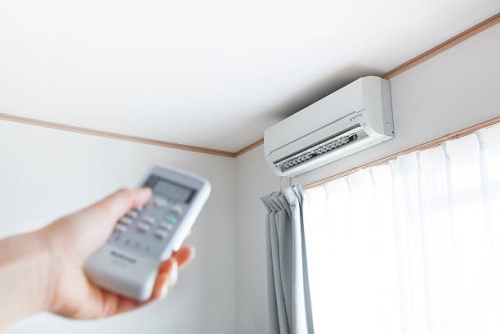
Argentina’s room air conditioner industry is developing steadily as households and businesses seek more reliable ways to manage rising temperatures, seasonal heat, and changing indoor comfort expectations. Demand is particularly important in densely populated urban centres, where apartments, offices, retail spaces, and hospitality establishments require practical cooling solutions.
According to the Argentina room air conditioners market analysis by Vyansa Intelligence, the industry was valued at USD 1.04 billion in 2025. It is projected to reach USD 1.16 billion by 2032, expanding at a CAGR of 1.57% from 2026 to 2032.
Although the projected growth rate is moderate, replacement purchases, inverter technology, energy-efficiency requirements, and increasing interest in connected appliances are expected to create consistent opportunities for manufacturers, distributors, installers, and service providers.
Seasonal Heat Continues to Support Cooling Demand
Argentina experiences considerable climatic variation, ranging from subtropical conditions in the north to temperate weather in central regions and cooler conditions in the south. This diversity creates different cooling requirements across the country.
Demand for room air conditioners is generally stronger in densely populated and warmer areas, where prolonged summer temperatures can affect residential comfort and workplace productivity. Urbanisation also contributes to demand because buildings in crowded cities may retain heat and offer limited natural ventilation.
Split air conditioners are widely suited to apartments, homes, small offices, and retail premises because they provide targeted cooling without requiring a central air-conditioning system. Reverse-cycle models also appeal to consumers seeking both cooling and heating from one appliance.
Energy Efficiency Is Becoming a Major Buying Consideration
Electricity consumption is an important concern for Argentine consumers when selecting cooling equipment. Rather than evaluating only the initial purchase price, buyers are increasingly considering energy labels, operating expenses, cooling capacity, product lifespan, and maintenance requirements.
According to the International Energy Agency (IEA), improving the energy efficiency of cooling equipment is essential for reducing electricity demand while maintaining indoor comfort. These trends are encouraging consumers to choose air conditioners that deliver higher efficiency and lower operating costs.
Argentina’s official energy-efficiency guidance states that air conditioners must carry energy labels. The government identifies Class A as the minimum efficiency level for cooling mode, while additional categories such as A+, A++, and A+++ indicate progressively higher efficiency.
These labels allow consumers to compare products more easily and understand how appliance efficiency may influence long-term electricity consumption. Manufacturers offering efficient systems with transparent performance information are therefore likely to gain greater consumer attention.
Inverter Systems Are Transforming Product Expectations
Inverter technology is becoming increasingly relevant because it allows an air conditioner’s compressor to adjust its operating speed according to cooling requirements. Instead of repeatedly switching on and off at full capacity, an inverter system can maintain a more consistent indoor temperature.
This capability can improve comfort, reduce temperature fluctuations, lower noise levels, and decrease unnecessary electricity use. Official consumption estimates published by Argentina’s electricity regulator show lower hourly energy use for listed inverter air conditioners than comparable conventional units with similar cooling capacities.
As consumers become more aware of operating costs, inverter systems are expected to become a stronger replacement choice. Their higher initial price may be balanced by improved efficiency, quieter operation, and better long-term performance.
Smart Controls Are Improving User Convenience
Digital functions are also changing how consumers interact with room air conditioners. Modern units increasingly include programmable timers, sleep settings, temperature sensors, Wi-Fi connectivity, mobile applications, and automated operating modes.
These features allow users to control cooling more precisely and reduce unnecessary operation. For example, a connected system may be activated shortly before a resident returns home rather than operating throughout the day.
Smart sensors can also adjust compressor output and airflow according to room conditions. Products that combine energy monitoring, remote control, and simple user interfaces are likely to attract technology-conscious households.
Replacement Purchases Will Remain Important
Argentina already has a substantial installed base of room air conditioners, making replacement demand an important contributor to future sales. Older systems may consume more electricity, operate noisily, provide inconsistent cooling, or require frequent repairs.
Consumers replacing ageing equipment are increasingly likely to compare inverter technology, energy classifications, warranty coverage, refrigerant type, cooling capacity, and after-sales support.
The Argentina room air conditioners industry outlook suggests that gradual replacement cycles will support steady expansion through 2032. Retailers and manufacturers can benefit by clearly communicating the long-term value of efficient products rather than relying only on promotional pricing.
Proper Capacity and Installation Affect Performance
Selecting the correct cooling capacity is essential. An undersized unit may operate continuously without achieving the desired temperature, while an oversized system may cycle frequently and use electricity inefficiently.
Room dimensions, insulation, ceiling height, sunlight exposure, occupancy levels, window area, and regional climate should all be assessed before installation. Professional installation is equally important because poor equipment positioning, incorrect refrigerant charging, or inadequate sealing can reduce efficiency.
Argentina’s official guidance recommends comparing an air conditioner’s cooling capacity with the specific needs of the room before purchasing. It also advises users to keep doors and windows closed during operation and to switch the system off when leaving the space.
Future Outlook
The projected increase from USD 1.04 billion in 2025 to USD 1.16 billion by 2032 reflects the stable development of Argentina’s room air conditioner industry.
Growth will be supported by seasonal cooling requirements, urban housing, equipment replacement, inverter adoption, energy labels, and smart control features. However, affordability and electricity costs will continue influencing purchasing decisions.
Companies that provide appropriately sized products, efficient performance, dependable installation, accessible maintenance, and strong after-sales service will be better positioned to meet evolving consumer expectations.