


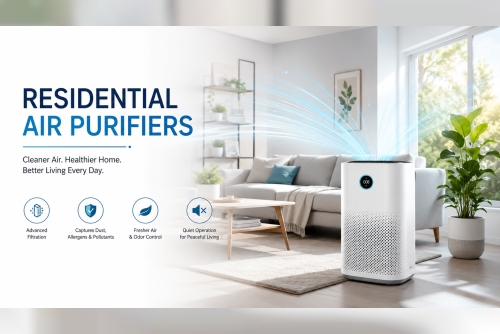
Indoor air quality has become one of the most talked-about aspects of modern home living. While people often focus on keeping their homes clean, many overlook the invisible pollutants that circulate indoors every day. Dust particles, pollen, pet dander, cooking smoke, mold spores, volatile organic compounds (VOCs), and even microscopic bacteria can remain suspended in the air for hours. As homes become more energy-efficient and tightly sealed, these pollutants have fewer opportunities to escape, making indoor air quality an increasingly important concern.
Residential air purifiers have emerged as practical solutions for improving the quality of the air people breathe inside their homes. Once viewed as niche appliances for allergy sufferers, these devices are now becoming common household essentials. Whether someone lives in a busy metropolitan area affected by outdoor pollution or in a suburban neighborhood with seasonal allergens, air purifiers are helping homeowners create healthier and more comfortable indoor environments.
Why Indoor Air Quality Matters More Than Ever
The average person spends a significant portion of their day indoors, whether working from home, sleeping, studying, or relaxing with family. While outdoor pollution often receives more attention, indoor air can sometimes contain higher concentrations of pollutants because of limited ventilation and everyday household activities.
Cooking, cleaning products, furniture, paints, carpets, candles, fireplaces, and even certain building materials can release particles and gases into the air. Add pet hair, pollen carried indoors on clothing, and seasonal dust, and it becomes clear why maintaining clean indoor air has become a growing priority.
Poor indoor air quality may contribute to discomfort such as sneezing, watery eyes, headaches, fatigue, and irritation of the nose and throat. Individuals with allergies, asthma, or respiratory sensitivities may notice these effects even more. While an air purifier is not a replacement for proper cleaning or ventilation, it serves as an additional layer of protection by continuously filtering airborne contaminants.
How Residential Air Purifiers Actually Work
At their core, residential air purifiers operate on a straightforward principle: draw in air, remove unwanted particles, and release cleaner air back into the room. However, modern devices achieve this through several advanced filtration technologies that often work together.
High-Efficiency Particulate Air (HEPA) filters remain one of the most trusted filtration methods. These filters are designed to capture extremely small airborne particles, including dust, pollen, mold spores, and pet dander.
Many residential air purifiers also include activated carbon filters, which are effective at absorbing household odors and certain gases produced by cooking, smoke, cleaning chemicals, and volatile organic compounds.
Some premium models incorporate ultraviolet (UV-C) technology to target certain microorganisms, while others use photocatalytic oxidation or plasma-based purification methods to reduce airborne contaminants. Manufacturers continue to refine these technologies while ensuring safety, energy efficiency, and quieter operation.
Increasingly, hybrid filtration systems combine multiple purification methods into a single unit, allowing homeowners to address a broader range of indoor air quality challenges simultaneously.
Smart Technology Is Transforming Home Air Purification
One of the biggest changes in recent years has been the integration of smart home technology into residential air purifiers. Rather than simply operating at fixed fan speeds, many modern units continuously monitor indoor air quality using built-in sensors.
These sensors detect airborne particles and automatically adjust purification levels based on changing conditions. For example, if cooking smoke fills the kitchen or pollen levels rise after opening a window, the purifier can increase its fan speed without requiring manual intervention.
Smartphone connectivity has also become increasingly common. Homeowners can monitor indoor air quality, receive filter replacement reminders, schedule operating hours, and control devices remotely through mobile applications.
Voice assistant compatibility further enhances convenience by allowing users to adjust settings through simple voice commands. Integration with broader smart home ecosystems means air purifiers can work alongside HVAC systems, smart thermostats, and automated ventilation systems to optimize indoor comfort.
Energy Efficiency Is Becoming a Key Priority
As residential air purifiers are often designed to operate for extended periods, manufacturers have placed greater emphasis on reducing electricity consumption. Modern motors, optimized airflow designs, and intelligent automation help balance purification performance with lower energy usage.
Automatic sleep modes reduce fan speed during nighttime operation, minimizing both electricity consumption and noise. Some devices even learn daily usage patterns and adjust operation accordingly, ensuring that energy is used only when needed.
Energy-efficient designs also contribute to longer product lifespans by reducing stress on internal components, making maintenance simpler and ownership more cost-effective over time.
Quiet Operation Improves Everyday Comfort
Noise levels once represented one of the biggest drawbacks of residential air purifiers. Earlier models often produced constant humming sounds that could become distracting during sleep or work.
Today's designs prioritize acoustic engineering alongside filtration performance. Improved fan blade designs, insulated motors, and optimized airflow pathways allow many units to operate almost silently on lower settings.
This quiet performance has made air purifiers suitable for bedrooms, nurseries, home offices, libraries, and study rooms where maintaining a peaceful environment is essential. Sleep modes further reduce operational noise while maintaining continuous air cleaning throughout the night.
Compact Designs Blend Into Modern Homes
Today's consumers increasingly expect household appliances to complement interior design rather than dominate it. Residential air purifier manufacturers have responded with sleek, minimalist products that fit naturally into contemporary living spaces.
Rounded edges, neutral color palettes, hidden control panels, and compact footprints allow these devices to integrate seamlessly into bedrooms, living rooms, apartments, and home offices.
Some premium models feature ambient lighting, touch-sensitive controls, and digital air quality displays that provide real-time feedback while maintaining an elegant appearance.
The shift toward portable designs also enables users to move devices between rooms depending on daily activities or seasonal needs.
Addressing Seasonal Air Quality Challenges
Different seasons bring different indoor air quality concerns. During spring, pollen levels often increase dramatically, making air purification valuable for allergy sufferers. Summer may introduce wildfire smoke or elevated outdoor pollution that enters homes through ventilation systems.
Autumn can bring dust accumulation as heating systems resume operation, while winter often results in reduced ventilation because windows remain closed for extended periods.
Residential air purifiers help maintain more consistent indoor air quality regardless of seasonal fluctuations. Combined with routine cleaning and appropriate ventilation, they contribute to healthier indoor environments throughout the year.
Supporting Homes with Pets
Pet ownership continues to grow worldwide, bringing companionship along with additional indoor air quality considerations. Pet hair, dander, and odors can accumulate quickly, particularly in smaller homes or apartments.
Modern residential air purifiers designed for pet owners typically feature high-capacity filtration systems capable of capturing fine pet-related particles while activated carbon filters help reduce lingering odors.
Some advanced units include specialized pre-filters that capture larger particles before they reach the primary filtration system, extending filter life and maintaining consistent purification performance.
While regular grooming and cleaning remain important, air purifiers provide valuable support in managing airborne pet allergens.
Cleaner Air for Remote Work and Home Learning
The rise of remote work and hybrid lifestyles has transformed homes into multifunctional environments. Living rooms have become offices, bedrooms double as study spaces, and dining tables often serve as workstations.
As people spend longer hours indoors, maintaining comfortable air quality has become increasingly important for productivity and overall well-being.
Cleaner indoor air may help create a more pleasant working environment by reducing dust accumulation and minimizing airborne irritants. Combined with proper lighting, ergonomic furniture, and adequate ventilation, air purification contributes to healthier home workspaces.
Maintenance Remains Surprisingly Simple
One reason residential air purifiers have become more accessible is the simplicity of routine maintenance. Most systems require only periodic cleaning of pre-filters and scheduled replacement of HEPA or activated carbon filters.
Many smart models now track filter usage automatically and notify users when maintenance is required. This removes much of the guesswork while ensuring the purifier continues operating efficiently.
Regular maintenance not only preserves filtration performance but also helps extend the lifespan of the appliance.
Future Innovations Are Expanding Possibilities
Residential air purification continues to evolve rapidly as manufacturers explore new technologies focused on convenience, intelligence, and sustainability.
Artificial intelligence is beginning to play a greater role in predicting indoor air quality changes based on occupancy, weather conditions, and household activities. Future systems may proactively adjust filtration before pollution levels increase.
Machine learning algorithms could personalize purification schedules according to family routines, automatically optimizing performance while minimizing energy consumption.
Researchers are also exploring longer-lasting filter materials, recyclable filtration components, biodegradable filter media, and environmentally friendly manufacturing processes that reduce the overall environmental footprint.
Integration with smart building systems may eventually allow entire homes to coordinate ventilation, humidity control, temperature regulation, and air purification as part of a unified indoor environmental management system.
Choosing the Right Residential Air Purifier
Selecting an appropriate residential air purifier depends on several practical considerations rather than simply choosing the largest or most expensive model.
Room size remains one of the most important factors. A purifier designed for a small bedroom may not effectively clean the air in a large open-plan living area. Matching the device's coverage area to the intended room ensures consistent performance.
Filtration technology should align with household needs. Families dealing primarily with dust and pollen may prioritize HEPA filtration, while homes with pets or cooking odors often benefit from activated carbon filters. Those seeking broader protection may prefer multi-stage filtration systems.
Noise level, energy efficiency, maintenance requirements, smart connectivity, portability, and replacement filter availability should also be evaluated before making a decision.
Ultimately, the best residential air purifier is one that fits seamlessly into everyday life while delivering reliable, continuous performance.
Looking Ahead
Residential air purifiers have evolved from specialized health devices into practical home appliances that support cleaner, more comfortable indoor environments. Advances in filtration technology, intelligent automation, energy efficiency, and user-friendly design have made them more capable and accessible than ever before.
As awareness of indoor environmental quality continues to grow, homeowners are increasingly recognizing that clean air is just as important as clean water or a well-maintained home. While no single appliance can eliminate every indoor pollutant, modern air purifiers provide an effective and convenient way to reduce airborne contaminants and improve overall living conditions.
Looking ahead, ongoing innovation will likely make residential air purification even smarter, quieter, more sustainable, and more deeply integrated into connected homes. For families seeking greater comfort, improved indoor air quality, and healthier living spaces, residential air purifiers are becoming an increasingly valuable part of everyday life.