


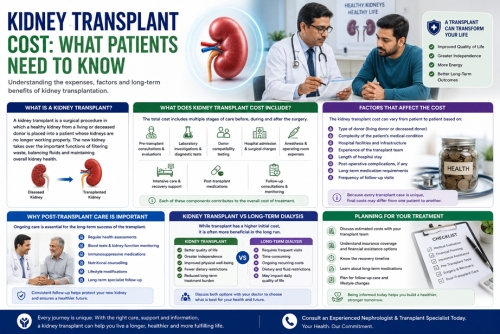
For patients diagnosed with end-stage kidney disease, a kidney transplant can offer a better quality of life than long-term dialysis. One of the most common questions patients and their families ask is, "How much is a kidney transplant cost?" While there is no fixed price, understanding the factors that influence the kidney transplant cost can help you plan your treatment and finances more effectively.
A kidney transplant involves replacing a damaged or non-functioning kidney with a healthy kidney from a living or deceased donor. The procedure requires careful evaluation before surgery, a highly skilled transplant team, advanced medical facilities, and lifelong follow-up care. Because every patient's medical condition is different, the overall cost may vary from one hospital to another.
In India, the kidney transplant cost generally ranges from ₹5,00,000 to ₹12,00,000. This estimate usually includes the transplant surgery, hospital stay, operating theatre charges, doctor's fees, nursing care, and basic medical services. However, the final cost depends on several individual factors.
Some of the major factors that affect kidney transplant cost include:
Type of kidney donor (living or deceased) Patient's overall health condition Pre-transplant investigations and compatibility testing Surgeon's expertise and transplant team Hospital infrastructure and intensive care facilities Length of hospital stay Post-transplant medications Follow-up consultations and laboratory monitoringBefore the transplant, patients undergo detailed medical assessments, including blood tests, imaging studies, tissue matching, infection screening, and overall fitness evaluation. These investigations help doctors determine whether the patient is suitable for transplantation and identify the most compatible donor.
After surgery, patients need regular medical follow-up and immunosuppressant medications to reduce the risk of organ rejection. These medicines are an essential part of long-term transplant success and should be considered when estimating the total treatment cost.
Many patients compare transplantation with dialysis when evaluating expenses. Although dialysis may appear less expensive initially, recurring treatment sessions over several years often result in significantly higher cumulative costs. For eligible patients, kidney transplantation can provide better long-term health outcomes, greater independence, fewer dietary restrictions, and improved overall quality of life.
Choosing an experienced transplant centre is equally important. Hospitals with dedicated nephrology and transplant teams provide comprehensive care that includes donor evaluation, transplant surgery, intensive care support, infection management, rehabilitation, nutritional counselling, and long-term monitoring. This multidisciplinary approach helps improve patient safety and transplant success.
Patients should also discuss insurance coverage, government health schemes, financing options, and available transplant packages before making a treatment decision. Understanding these options can reduce financial stress and help families prepare for both the procedure and long-term care.
Although the kidney transplant cost is an important consideration, the experience of the transplant team, hospital facilities, post-operative care, and long-term outcomes should also play a major role when choosing where to receive treatment.
For more information about kidney transplant treatment, eligibility, and estimated kidney transplant cost, visit: https://www.medicoverhospitals.in/surgery-cost/kidney-transplant?utm_source=Galaxy+Tech+Solutions&utm_medium=Referral&utm_campaign=Galaxy+Tech+Solutions



 Wedding Venue in Albania | Vila Barbaut