


Efficient industrial machinery depends on reliable power transmission and organized cable management. For engineers and maintenance professionals, understanding the function and selection of components like cable carriers, various types of sprockets, and chain coupling solutions can dramatically enhance machine performance. In this article, we explore these components and their coupling chain applications to help you optimize industrial operations.
Cable Carriers: Protecting Your Cables for Long-Term PerformanceCable carriers, also known as energy chains or drag chains, are specialized devices designed to secure and guide electrical cables, hoses, and pneumatic lines on moving machinery. They prevent excessive bending, tangling, and wear, which can lead to costly downtime.
Benefits of Cable CarriersIncreased Equipment Lifespan: Cables are less prone to wear, reducing the likelihood of frequent replacements.Enhanced Safety: By organizing cables, they reduce the risk of tripping hazards and mechanical damage.Consistent Performance: Properly guided cables ensure reliable signal transmission and uninterrupted operation.Flexible Design Options: Materials such as steel, reinforced polymers, and hybrid designs allow application in robotics, conveyors, and CNC machinery.ApplicationsCable carriers are ideal for robotic arms, automated gantries, CNC equipment, and material handling systems where repetitive motion can otherwise damage unprotected cables. By selecting the right carrier, machinery experiences smoother motion, reduced cable fatigue, and lower maintenance requirements.
Types of Sprockets: Choosing the Right Component for Your SystemSprockets are toothed wheels that engage roller chains to transmit rotational motion. Selecting the correct types of sprockets is essential for improving efficiency, reducing wear, and maintaining proper chain alignment.
Common Types of Sprockets: Plain Bore Sprockets: These have an unfinished central hole and are machined to fit the specific shaft size. They are commonly used in agricultural machinery and conveyor systems.
: Finished Bore Sprockets: Pre-machined with keyways and set screws, these sprockets offer easy installation and replacement, ideal for maintenance teams.
: Taper-Lock Sprockets: Featuring a detachable taper bushing, these sprockets provide secure shaft attachment and facilitate quick removal without causing damage.
: Idler Sprockets: Designed to maintain proper chain tension, idler sprockets reduce wear, noise, and misalignment.
: Double-Pitch Sprockets: Suited for double-pitch conveyor chains, these sprockets improve performance in low-load, long-distance conveying applications.
Selecting the appropriate sprocket type based on load requirements, speed, and chain specifications ensures smoother operation and longer component lifespan.
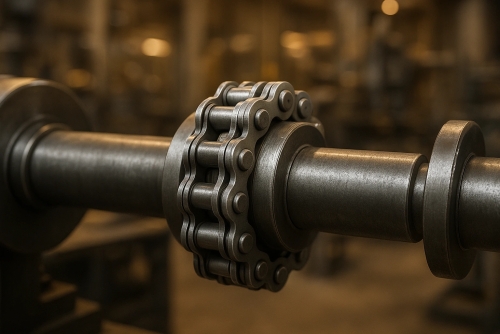
Chain Coupling: Flexible and Efficient Power TransmissionChain coupling is a mechanical solution that connects two shafts using a roller chain and sprocket hubs. It is widely recognized for its simplicity, durability, and ability to handle slight misalignment while transmitting power.
Advantages of Chain Coupling: Tolerance to Misalignment: It accommodates angular, axial, and radial misalignment better than rigid couplings.
: Shock Absorption: Reduces vibrations and absorbs torque fluctuations during start-up and load changes.
: Easy Maintenance: Roller chains are simple to inspect and replace, minimizing downtime.
: High Torque Capacity: Suitable for heavy-duty industrial applications where other couplings may fail.
Steel manufacturing, chemical processing, mining, pumping systems, and material handling equipment commonly rely on chain coupling for reliable power transfer. Its combination of flexibility and strength makes it a preferred choice for demanding operations.
Coupling Chain Applications: Enhancing Machinery EfficiencyThe versatility of coupling chain applications allows their use across multiple industrial systems where torque transmission and misalignment tolerance are crucial.
Key Applications: Conveyor Drives: Chain couplings connect motors to conveyor rollers, ensuring precise speed and minimizing slippage.
: Pumps: Centrifugal and gear pumps use chain couplings to manage vibration and alignment inconsistencies.
: Mixers and Agitators: Absorb torque fluctuations during operation, protecting the motor and driven equipment.
: Compressors: Maintain balanced rotation even under varying loads, preventing premature wear.
: Industrial Fans and Blowers: Ensure smooth rotational speed despite load variations in HVAC and dust collection systems.
By integrating chain couplings in these applications, industrial equipment achieves greater reliability, reduced mechanical stress, and lower maintenance costs.
Integrating Cable Carriers, Sprockets, and Chain CouplingsA well-designed industrial system often requires a combination of cable carriers, types of sprockets, and chain coupling solutions. Each component contributes to efficiency, safety, and reliability.
For example, a conveyor system may use cable carriers to organize wiring, select specific sprockets for precise chain engagement, and apply a chain coupling to connect the motor to the drive shaft. Together, these components ensure smooth operation, reduce downtime, and extend machinery service life.
Selecting the Right Components for Industrial Machinery: Evaluate Load Requirements: Torque and tension dictate sprocket size, chain coupling specifications, and cable carrier strength.
: Consider Environmental Factors: Harsh conditions such as chemicals, heat, and dust influence material selection.
: Plan for Maintenance: Components designed for easy replacement reduce downtime and operating costs.
: Choose a Trusted Supplier: High-quality parts ensure compatibility and long-term system performance.
By considering these factors, engineers can optimize their machinery for performance and longevity.
SummaryUnderstanding and implementing the right cable carriers, types of sprockets, coupling chain applications, and chain coupling solutions is essential for modern industrial systems. These components collectively enhance performance, reduce maintenance, and increase equipment lifespan. For reliable, high-quality industrial parts that ensure long-term operational success, trust ohio roller chain.