

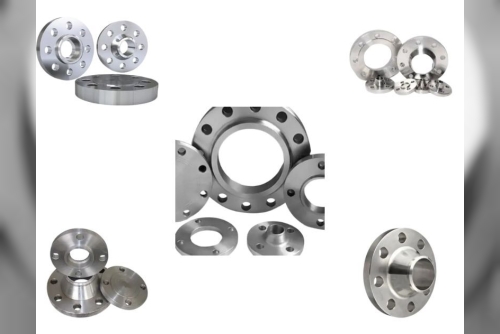
Pipex.ai is a trusted B2B portal for sourcing high-quality stainless steel flanges that meet the diverse needs of modern industrial projects. Their range includes advanced materials such as Stainless Steel 304LN, 304H, 304N, 309H, and 310 flanges, each designed to deliver reliable performance based on temperature, corrosion exposure, and mechanical demands. From nitrogen-enhanced grades like 304LN and 304N that offer improved strength and weldability, to high-temperature specialists like 304H, 309H, and 310 that can withstand extreme heat and oxidation in chemical, petrochemical, and power plant applications.
Stainless Steel 304LN FlangesGrade 304LN is a nitrogen-strengthened version of the traditional 304 series, combining the familiar chromium-nickel austenitic structure with improved mechanical performance thanks to nitrogen. The increased nitrogen content enhances yield and tensile strength as well as toughness, while maintaining excellent corrosion resistance.In states where welding is frequent and maintaining grain-boundary integrity is important (for example, in welded pipelines or power-plant feed lines), 304LN flanges help mitigate sensitization risk and provide greater reliability.
Stainless Steel 304H Flanges304H is essentially the high-carbon variant of 304 stainless steel, designed to hold strength at elevated temperatures. While its corrosion resistance is similar to 304, the higher carbon content gives better high-temperature creep and tensile performance.When your application calls for sustained service at elevated temperatures, such as steam lines, chemical process heaters, or furnace piping, 304H flanges become a logical B2B choice. In a B2B marketing context, emphasize the “H” grade’s endurance in higher-temperature environments and present it alongside the typical 304 baseline for comparison.
Stainless Steel 304N Flanges304N is a nitrogen-enhanced derivative of 304 stainless. By addition of nitrogen (instead of raising carbon, as in the “H” grade), 304N provides improved strength and toughness with the corrosion resistance of 304. According to general materials databases, nitrogen addition in austenitic stainless steels (such as 304N) increases tensile/yield strength without significantly altering weldability.For B2B sales teams, positioning 304N flanges as a “step-up” from standard 304 in mechanical performance—while keeping corrosion behavior largely equivalent—is a strong message.
Stainless Steel 309H FlangesGrade 309H is tailored for high-temperature applications. With elevated chromium and nickel content (and the “H” designation for higher carbon), 309H flanges deliver excellent oxidation and creep resistance in operating environments up to and beyond ~1000 °C (1830 °F). Typical use cases include petrochemical heaters, reformers, boiler super‐heater coils, kilns, and other components where both high temperature and corrosion combine. From a B2B Marketing perspective, 309H flanges represent the “premium high-temperature solution” and are best offered to clients whose service conditions exceed those of standard 304/316 setups. On a B2BMarketplace channel, make clear the premium nature and higher cost, but also the longer life‐cycle and reliability benefits.
Stainless Steel 310 FlangesGrade 310 (and its 310H/310S variants) stands at the high end of the austenitic stainless family when it comes to temperature resistance and stability. Its chromium (~24-26 %) and nickel (~19-22 %) content give strong resistance to oxidation, thermal cycling, and creep deformation at temperatures up to ~1150 °C (2100 °F) under certain conditions.For B2B sales via PipeX, highlight that 310 flanges are used in power-generation, turbine exhausts, high‐temperature chemical processing, and furnace applications. They should be positioned as a specialist grade versus more “standard” grades like 304.
Practical Considerations for B2BMarketplace SourcingSpecification clarity: Ensure flange grade (304LN, 304H, 304N, 309H, 310) is clearly stated in the specification sheet and certified material test reports (MTRs).Standard compliance: Typical dimensions and classes are covered by standards such as ASME B16.5, ASME B16.47, and ASTM A182.
Service environment match: For normal temperature corrosion service, 304N or 304LN may suffice. For elevated-temperature or cyclic thermal service, move to 304H, 309H, or 310, depending on severity.
Cost vs life-cycle: As you move up grades, cost rises—but so does reliability under more extreme conditions and overall life-cycle cost advantage. This is a strong narrative for B2B Sales.
Supply chain readiness: On a B2BMarketplace like PipeX, ensure stock availability, delivery lead-time, and traceability (heat numbers, MTRs) are clearly available.
In summary, when utilizing a B2BMarketplace such as PipeX (pipex.ai) for sourcing, the material selection of flanges is not simply about matching size and pressure class; it’s about matching service conditions, mechanical demands, and operational environment.
304LN: enhanced weld-joint integrity and corrosion resistance304H: high-temperature strength
304N: superior mechanical vs standard 304 with the same base corrosion resistance
309H: high‐temperature oxidation / creep resistance
310: premium grade for extreme high‐temperature service
By aligning your B2B Marketing messaging and B2B Sales discussions around these key distinctions, particularly in a B2BMarketplace context, you will empower clients with clarity on grade selection, performance vs cost trade-offs, and long-term value.