


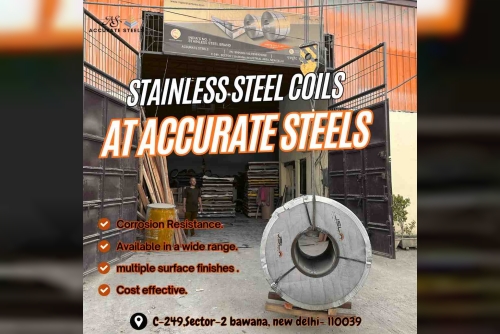
Stainless steel coils are among the most crucial raw materials utilised across various industries. Known for their excellent corrosion resistance, strength, and long service life, stainless steel coils are widely used in construction, manufacturing, the automotive industry, kitchen equipment, and the chemical industry. Due to their versatility and durability, they play a vital role in modern industrial and commercial applications.
A stainless steel coil is a flat-rolled stainless steel product that is wound into a coil form after the rolling process. These coils are manufactured in different thicknesses, widths, grades, and surface finishes to suit diverse applications. Stainless steel coils can be further processed into sheets, strips, pipes, tubes, and fabricated components.
The primary alloying element in stainless steel is chromium, which forms a protective oxide layer on the surface. This layer prevents rust and corrosion, making stainless steel coils suitable for both indoor and outdoor environments.
Common Grades of Stainless Steel CoilStainless steel coils are available in several grades, each offering unique properties:
SS 201 & SS 202: Economical grades with good strength and moderate corrosion resistance, commonly used in household and decorative applications.
SS 304: The most widely used grade, offering excellent corrosion resistance, hygiene, and durability. Ideal for food processing and kitchen equipment.
SS 316: Contains molybdenum, providing superior corrosion resistance in marine and chemical environments.
SS 430: Ferritic grade with good corrosion resistance and magnetic properties, often used in appliances and decorative panels.
Selecting the right grade depends on the application, environmental conditions, and budget.
Benefits of Stainless Steel CoilsStainless steel coils offer numerous advantages, making them a preferred material in many industries:
1. Corrosion ResistanceThe chromium content protects the steel from rust, oxidation, and chemical damage, even in harsh conditions.
2. High Strength and DurabilityStainless steel coils can withstand heavy loads, pressure, and wear, ensuring long-term performance.
3. Heat and Temperature ResistanceMany grades maintain their strength and structure at high temperatures, making them suitable for industrial and heat-exposed applications.
4. Easy FabricationStainless steel coils can be easily cut, welded, bent, and formed into various shapes without losing strength.
5. Hygienic and Low MaintenanceTheir smooth surface resists bacteria and is easy to clean, making them ideal for food, medical, and pharmaceutical use.
6. Eco-FriendlyStainless steel is 100% recyclable, contributing to sustainable manufacturing practices.
Uses of Stainless Steel CoilsDue to their versatility, stainless steel coils are used in a wide range of industries:
Construction: Roofing, cladding, structural components, and railings
Kitchen Equipment: Sinks, cookware, countertops, and appliances
Automotive Industry: Exhaust systems, trims, and structural parts
Chemical & Pharmaceutical Plants: Storage tanks, reactors, and pipelines
Manufacturing: Sheets, tubes, pipes, and fabricated components
Decorative Applications: Elevators, panels, and architectural designs
Their adaptability makes them suitable for both functional and aesthetic purposes.
Manufacturing Process of Stainless Steel CoilThe production of stainless steel coils involves several carefully controlled steps to ensure quality and consistency:
1. Raw Material SelectionIron ore, chromium, nickel, and other alloying elements are selected based on the desired grade.
2. MeltingThe raw materials are melted in an electric arc furnace at high temperatures to form molten steel.
3. CastingThe molten steel is cast into slabs or billets, which serve as the base material for rolling.
4. Hot RollingThe slabs are heated and passed through rolling mills to reduce thickness and form coils.
5. PicklingAcid treatment removes surface scale and impurities formed during hot rolling.
6. Cold RollingCold rolling further refines thickness, improves surface finish, and enhances mechanical properties.
7. AnnealingHeat treatment relieves internal stresses and improves ductility.
8. Surface FinishingDifferent finishes such as 2B, BA, No.4, or mirror finish are applied based on requirements.
9. Inspection and PackagingCoils undergo strict quality checks before being packed and dispatched.
How to Choose the Right Stainless Steel CoilChoosing the correct stainless steel coil depends on several factors:
Environment: Marine or chemical environments require higher grades like SS 316.
Application: Food-grade uses need SS 304 or 316.
Thickness and Width: Should match fabrication requirements.
Budget: Grades like SS 201 and 202 offer cost-effective solutions for mild applications.
Standards and Certification: Ensure compliance with ASTM, JIS, or EN standards.
Stainless steel coils are an essential material for modern industries due to their strength, corrosion resistance, and versatility. Available in multiple grades and finishes, they cater to a wide range of applications, from construction and manufacturing to food processing and automotive industries. Understanding the grades, benefits, uses, and manufacturing process of stainless steel coils helps in selecting the right product for long-term performance and reliability.