


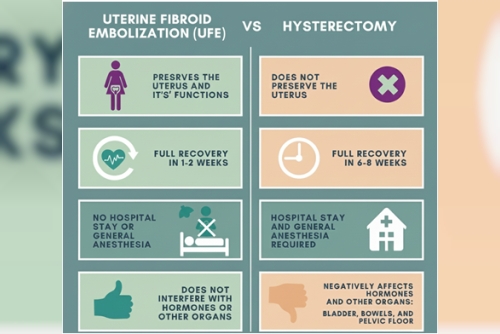
Uterine fibroids are common noncancerous growths that can lead to heavy bleeding, pelvic pressure, and discomfort. Many women look for treatment options that can relieve these symptoms effectively while fitting their lifestyle and long-term health goals. Among the available choices, UFE and hysterectomy are two well-known procedures, each offering different benefits and considerations.
Understanding how ufe vs hysterectomy differ in purpose, recovery, and outcomes helps women choose a treatment aligned with their medical needs and personal preferences. This guide explores the essential distinctions between the two, presenting clear information for individuals considering fibroid care.
What Is the Core Difference Between UFE and Hysterectomy?
UFE, or uterine fibroid embolization, is a minimally invasive procedure that blocks blood flow to fibroids, causing them to shrink naturally over time. It leaves the uterus in place and typically allows patients to return home the same day.
A hysterectomy removes the uterus completely. It ensures fibroids cannot return but requires surgery, anesthesia, and longer recovery.
These differences influence healing time, fertility, comfort, and long-term effects, which is why understanding both options are essential.
1. Treatment Purpose and Intended Outcome
UFE aims to shrink fibroids and reduce symptoms such as heavy menstrual bleeding and pelvic pressure. Because the uterus is preserved, this option is suitable for women who prefer to avoid surgical removal or want a less invasive approach.
Hysterectomy eliminates fibroids entirely by removing the uterus. It is considered a permanent solution and is often chosen when symptoms are severe or when additional uterine conditions are present.
2. Procedure Method and Invasiveness
UFE is performed through a tiny puncture in the wrist or groin. Using imaging guidance, the physician directs a catheter to the arteries supplying the fibroids and releases small particles that reduce blood flow. There are no large incisions, and the procedure is typically outpatient-based.
Hysterectomy is a surgical operation that may be performed abdominally, vaginally, or laparoscopically. Depending on the method, larger incisions may be required. Because it involves removal of an organ, it is classified as major surgery and requires hospital care.
3. Recovery Time and Physical Healing
Recovery after UFE is generally shorter due to its minimally invasive nature. Most individuals return to daily activities within one to two weeks. Temporary cramping, fatigue, and mild pelvic discomfort can occur but usually improve quickly.
Recovery after hysterectomy is longer. Depending on surgical type, it may take four to eight weeks for full healing. Activity restrictions are common, including limits on lifting, exercise, and routine household tasks. This extended downtime is an important consideration for women managing work or caregiving responsibilities.
4. Effectiveness in Relieving Fibroid Symptoms
UFE effectively reduces fibroid-related symptoms for many patients. Improvements in bleeding and pelvic pressure often appear within the first few months as fibroids gradually shrink. Follow-up imaging helps monitor progress.
Hysterectomy removes the uterus, so symptoms such as heavy bleeding or pressure cannot return. This provides complete and permanent relief. Women who desire total symptom resolution may consider this option when medically advised.
5. Fertility and Future Pregnancy Considerations
UFE retains the uterus, which means pregnancy may still be possible afterward. Fertility outcomes vary depending on fibroid size, location, and other health factors, so professional evaluation is important for women planning future pregnancies.
Hysterectomy ends fertility entirely. Once the uterus is removed, pregnancy is no longer possible. This option is generally recommended for women who have completed childbearing or for those whose symptoms are severe and unresponsive to other treatments.
6. Risks and Safety Factors
UFE has a low risk profile due to its minimally invasive approach. Temporary side effects such as cramping or low-grade fever can occur, and rare complications may require additional care. Most patients recover smoothly with proper medical guidance.
Hysterectomy carries higher risks because it is major surgery. Patients may experience complications such as infection, blood loss, or reactions to anesthesia. Hospital monitoring is required, and recovery involves close attention to incision care and physical activity limits.
7. Long-Term Considerations for Health and Lifestyle
Long-term outcomes differ between UFE vs hysterectomy.
With UFE, fibroids treated through embolization do not return, though new fibroids may develop, particularly in younger women. Regular medical follow-up ensures sustained symptom control.
With hysterectomy, fibroids cannot recur because the uterus is removed. Some women may experience changes related to pelvic support or hormonal balance depending on the surgical method. Discussing these possibilities with a physician helps set realistic expectations.
Common Questions About UFE vs Hysterectomy
Q: Which option heals faster?
A: UFE typically heals faster because it is minimally invasive and does not involve large incisions.
Q: Can symptoms come back after UFE?
A: Treated fibroids shrink and do not regrow, though new fibroids can form in the future.
Q: Is hysterectomy always required for fibroid treatment?
A: No. Many women choose non-surgical options such as UFE when appropriate for their condition.
Q: Who should help decide the right treatment?
A: A qualified specialist, such as those at USA Fibroid Centers, can recommend the most suitable choice based on symptoms, imaging results, and overall health.
Summary
Choosing between UFE and hysterectomy depends on individual health goals, lifestyle needs, and medical considerations. UFE offers a minimally invasive option with quicker recovery and uterine preservation, while hysterectomy provides a complete surgical solution that eliminates fibroids permanently. Understanding how these treatments differ supports better decision-making and helps women seek care that aligns with their long-term well-being.